.webp)
From Spike Plant to Ace: A Complete Valorant Tips & Guides Playbook
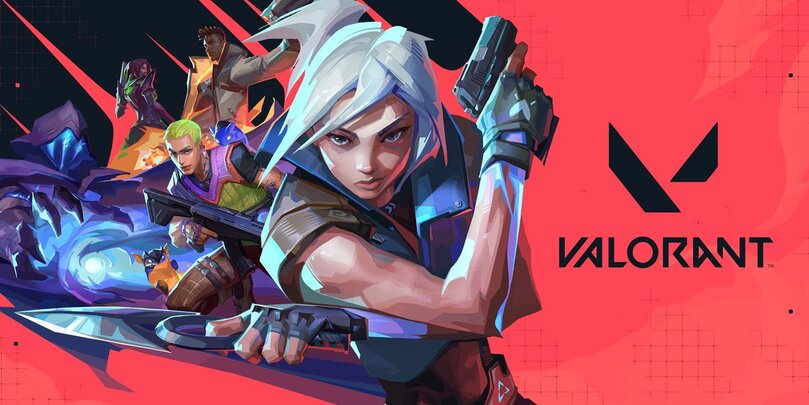
Valorant has grown from a niche tactical shooter into one of the most competitive team-based games in the world, blending precise gunplay with agent abilities that demand both mechanical skill and strategic thinking. Whether you just installed the game or you are stuck in a rank you feel you should have climbed out of months ago, the difference between an average player and a genuinely dangerous one usually comes down to habits, not raw talent. This guide walks through the full arc of a Valorant match and a Valorant career — from the mental preparation before you even queue up, through the split-second decisions of a live round, to the after-match review that actually makes those decisions better next time. Read it in order, because each section builds on the last.
1. Understanding Valorant's Core Mechanics Before You Play
Before worrying about crosshair placement or agent picks, new players need a working mental model of what actually decides a round. Valorant is fundamentally a round-based, first-to-13 elimination game where economy, information, and utility interact with raw aim. Unlike purely twitch-based shooters, a player with worse aim but better positioning and game sense can consistently beat a mechanically superior opponent. This is good news for beginners: improvement is available on multiple fronts at once, not just in a shooting range.
It also helps to understand the asymmetry between attackers and defenders. Attackers must find a way to plant the Spike and defend the plant for 45 seconds, while defenders simply need to prevent that from happening or defuse the Spike afterward. This asymmetry shapes almost every strategic decision in the game, from utility usage to rotations, and it's worth internalizing early rather than learning it the hard way over dozens of lost rounds.
Key Concepts to Learn First
- Round economy and how credits carry over between rounds
- The difference between "eco," "force-buy," and "full-buy" rounds
- How Spike timers and plant/defuse mechanics affect round pacing
- The role of ultimate points and how they charge over time
2. Choosing Your First Agent
Agent selection is often where new players get overwhelmed, since Valorant currently offers dozens of characters split across four roles: Duelist, Initiator, Controller, and Sentinel. Rather than picking whoever looks the coolest, it's far more useful to pick based on how forgiving the kit is. Agents with simple, reliable abilities let you focus your mental energy on aim and positioning instead of managing a complicated ability rotation.
For most beginners, starting with a Sentinel or a straightforward Controller is the smartest path. These roles reward map knowledge and utility timing over flashy, high-risk plays, and their abilities tend to have a smaller margin for error. Duelists, while popular in ranked lobbies because of their aggressive, kill-focused playstyle, actually punish inexperienced players the hardest, since a bad entry with no team follow-up almost always ends in a lost duel and a lost round.
Beginner-Friendly Role Breakdown
Sentinel
Provides map control tools like trip wires, turrets, or healing, which teach you to think defensively before you think offensively.
Controller
Focuses on smoke placement to block sightlines, which builds strong map awareness and timing instincts.
Initiator
Offers flashes and recon tools that reward good communication, making it a great choice once you're comfortable calling out information.
3. Mastering Crosshair Placement and Aim Fundamentals
Once the basics of the game are understood, aim becomes the single biggest lever for improvement, and crosshair placement is the foundation of good aim. The core idea is simple: your crosshair should always be at head height, pre-aimed at the most likely angle an enemy will appear from, rather than pointed at the floor or center of the screen. This single habit change often produces bigger rank gains than hundreds of hours in an aim trainer.
Counter-strafing is the second pillar. Valorant applies significant movement inaccuracy, meaning your bullets spread widely if you're still moving when you shoot. Tapping the opposite movement key briefly before firing stops your character almost instantly, letting you shoot accurately without fully stopping and losing tempo. Combined with good crosshair placement, counter-strafing is what separates players who "spray and pray" from players who consistently win first-contact duels.
Daily Aim Warm-Up Checklist
- 10 minutes in the shooting range practicing headshot-only bot drills
- 5 minutes of strafing and counter-strafing movement drills
- A few Deathmatch rounds to practice under real pressure
- One or two Spike Rush matches to warm up decision-making speed
4. Learning Map Callouts and Basic Positioning
Game sense begins with vocabulary. Every Valorant map has standardized callout names for chokepoints, sites, and rotations, and learning them is non-negotiable if you want to communicate effectively with teammates. Without shared callouts, even accurate information becomes useless because your team can't act on it fast enough.
Positioning builds directly on this vocabulary. A common beginner mistake is holding "wide" angles that expose your character to multiple sightlines at once, when a "tight" angle near cover limits how much of you an enemy can see before you see them. Learning to peek using cover, rather than standing in the open, is one of the fastest ways to reduce unnecessary deaths.
Positioning Habits Worth Building
- Pre-fire common angles only when you have solid information, not blindly
- Use "jiggle peeks" to gather information without fully exposing yourself
- Avoid holding the exact same angle round after round — vary it to stay unpredictable
5. Economy Management: Buy Phase Decisions
Understanding when to spend and when to save is arguably as important as aim itself, since a team with better weapons and utility has a substantial advantage regardless of individual skill. The buy phase happens at the start of every round, and decisions here are shaped by your team's current credit total, the previous round's outcome, and how many rounds remain.
A full buy typically includes a rifle, full shields, and at least one or two utility abilities, while an eco round involves saving credits entirely or buying only cheap weapons and armor. The trickiest decision is the force-buy — spending everything even when you can't fully equip, usually done to deny the enemy team an easy win or to catch them off guard. Communicating buy intentions with your team prevents mismatched economies, where some players are fully kitted and others are running with a pistol.
Simple Economy Rules of Thumb
- Under 2,000 credits after a loss: consider a full eco to save for next round
- 2,000–3,900 credits: a force-buy may be worth discussing with your team
- 4,000+ credits: full buy is almost always correct
- Never spend your last credits on armor alone if you can't afford a decent weapon
6. Utility Usage: Timing and Coordination
Abilities in Valorant are most powerful when used with intention rather than randomly at the start of a round. Smokes, flashes, and recon tools are strongest when timed to support a specific plan, such as smoking off a sightline right before an entry fragger pushes through, or flashing a corner exactly when a teammate is ready to peek it.
Wasting utility early, out of nervousness or habit, is one of the most common ways rounds are lost at lower ranks. A team with no smokes or flashes left for a late-round retake or execute is often at a severe disadvantage, even if they have better guns. Learning specific lineups for your favorite agents — pre-aimed throws that land in the same spot every time — removes guesswork and makes your utility far more reliable under pressure.
Utility Discipline Checklist
- Ask "what am I trying to accomplish" before using any ability
- Save at least one flash or smoke for retakes when possible
- Practice two or three key lineups per map instead of trying to learn all of them at once
7. Mid-Round Adjustments and Communication
Once a round is underway, the plan you made during the buy phase rarely survives contact with reality unchanged. Good players constantly update their read of the round based on new information: how many enemies have been spotted, where damage is coming from, and how much utility has already been used by both sides.
Clear, concise communication is what makes these adjustments possible. Callouts like enemy count, health status, and remaining utility should be short and specific rather than vague. A well-timed "two left, both low HP, site A" is far more useful than a panicked, unstructured shout mid-fight. Teams that communicate efficiently can often win rounds purely through better decision-making, even against opponents with a mechanical edge.
Communication Best Practices
Be Specific
State numbers, locations, and health status rather than general impressions.
Be Brief
Long callouts eat up time your teammates need to react.
Confirm, Don't Assume
If a teammate doesn't respond, repeat critical information once rather than assuming they heard it.
8. Clutch Situations: Staying Calm Under Pressure
Every player eventually faces a 1-vs-2 or 1-vs-3 clutch, and how you approach it matters more than raw aim. The instinct to panic and rush into open space usually gets you killed quickly. Instead, strong clutch players slow the pace down, using sound cues and map knowledge to isolate one enemy at a time rather than fighting multiple opponents simultaneously.
Playing for picks — taking a safe opportunity to eliminate one enemy without exposing yourself to the others — is often more valuable than trying to win the round outright in one aggressive push. Patience, combined with using the Spike timer to your advantage on offense or defense, frequently turns an unwinnable-looking situation into a stolen round.
Clutch Fundamentals
- Use sound to track enemy positions before making a move
- Isolate fights using chokepoints and doorways
- Manage the round timer and Spike timer as tools, not just obstacles
- Stay mentally calm — tilt leads to rushed, low-percentage decisions
9. Reviewing VODs and Identifying Mistakes
Improvement accelerates dramatically once players start reviewing their own gameplay instead of relying purely on memory. Recording matches and watching them back — particularly rounds you lost or died early in — reveals patterns that are invisible in the heat of the moment, such as consistently poor crosshair placement or a tendency to over-peek certain angles.
It helps to review with a specific question in mind rather than watching passively. Ask what information you had before each death, whether your positioning matched that information, and whether your decision matched your team's overall plan. Many players find that a small number of repeated mistakes account for the majority of their deaths, and fixing even one or two of these habits produces a noticeable rank improvement.
What to Look For When Reviewing
- Deaths where you had no information about the enemy's location
- Rounds where utility was used too early or not used at all
- Moments where communication was missing or unclear
- Repeated positioning mistakes on the same map or site
10. Ranking Up: Long-Term Improvement Strategies
Climbing the ranked ladder in Valorant is rarely about a single breakthrough moment; it's the compounding result of small, consistent improvements across aim, game sense, and communication. Setting specific, measurable goals — such as improving headshot percentage or reducing early-round deaths — gives your practice sessions direction instead of just grinding matches without a clear target.
It's also worth remembering that rank is a lagging indicator of skill, not a real-time one. Plateaus and even temporary rank drops are normal parts of the improvement process, especially as you adjust playstyles or try new agents. Surrounding yourself with a consistent group of teammates, maintaining a healthy mindset after losses, and revisiting the fundamentals covered in this guide periodically will do far more for long-term growth than chasing quick fixes or "meta" agent picks alone.
Long-Term Habits That Compound
- Set one specific improvement goal per week rather than trying to fix everything at once
- Play with a consistent group when possible to build real communication chemistry
- Take breaks after a string of losses to avoid tilt-driven decision-making
- Revisit fundamentals — crosshair placement, economy, and utility — every few weeks
Valorant rewards players who treat it as a game of layered decisions rather than pure reflexes. Aim will always matter, but the players who consistently climb the ranks are the ones who combine solid mechanics with disciplined economy management, purposeful utility usage, clear communication, and honest self-review. None of the individual tips in this guide are complicated on their own — the real skill lies in applying all of them consistently, round after round, until they become second nature. Start with one or two sections that feel most relevant to your current rank, build those habits first, and layer in the rest over time. Improvement in Valorant is rarely dramatic, but it is remarkably steady for anyone willing to put in deliberate practice.