






Introduction
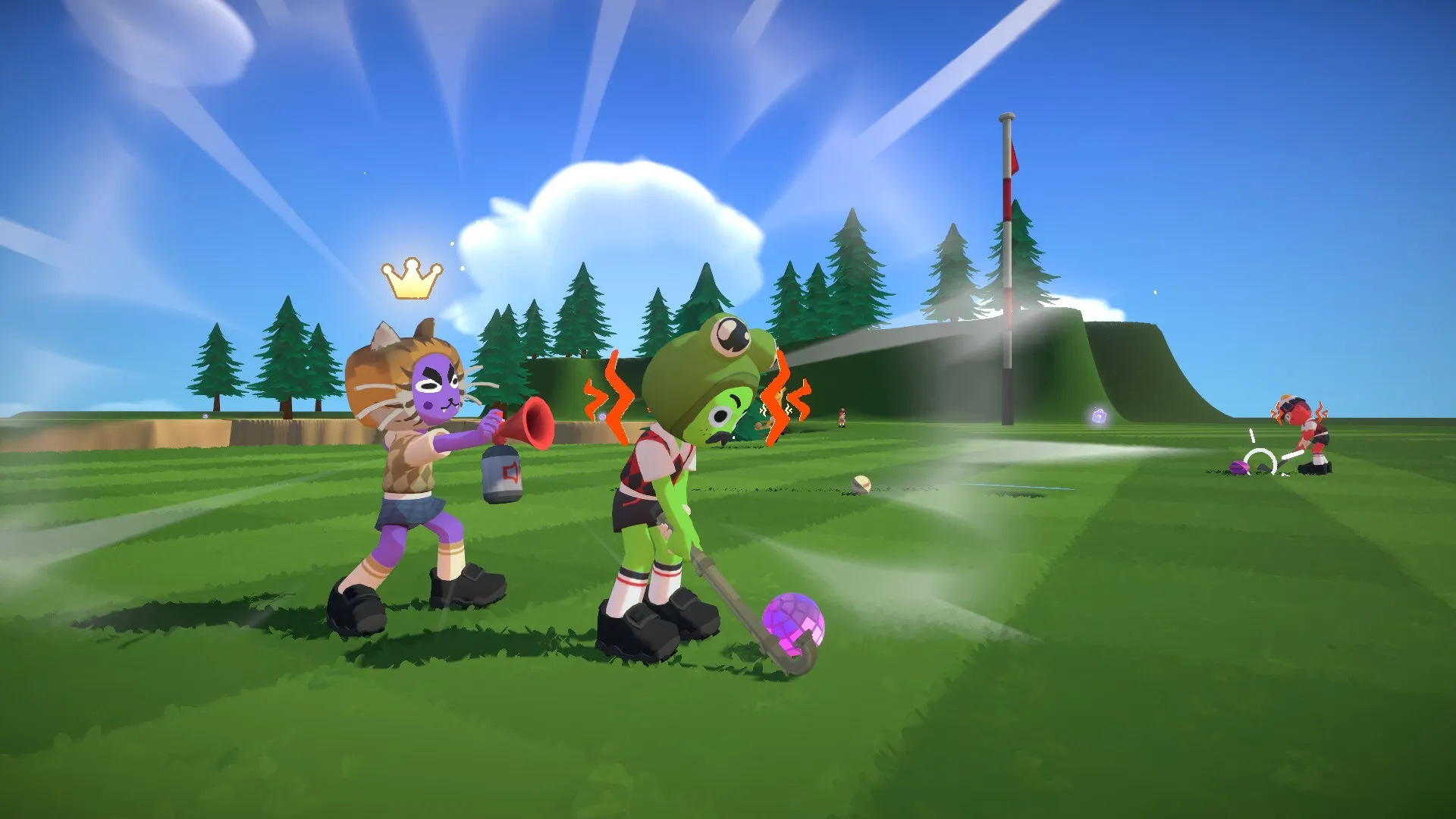
Super Battle Golf transforms the traditional sport of golf into a fast-paced competitive experience filled with chaotic obstacles, strategic power-ups, and unpredictable terrain. Instead of focusing purely on precision and patience like traditional golf simulations, Super Battle Golf emphasizes quick decision-making, shot control, and adapting to constantly changing conditions.
Players compete across colorful and sometimes chaotic courses where hazards, traps, and special abilities can dramatically alter the outcome of a match. Winning is not simply about hitting the ball accurately—it requires understanding the course layout, timing shots carefully, and using power-ups effectively to outmaneuver opponents.
This guide explains how to play Super Battle Golf step by step, helping you master shot mechanics, understand course hazards, use special abilities strategically, and develop the skills needed to consistently win matches.
1. Understanding the Core Gameplay
Super Battle Golf follows the basic objective of traditional golf: get the ball into the hole using as few strokes as possible. However, several gameplay elements change how the game is played.
Key features include:
- Fast-paced multiplayer matches
- Interactive course hazards
- Power-ups that alter gameplay
- Strategic shot planning
Matches are typically short but intense, with players racing to complete holes while avoiding traps and taking advantage of opportunities.
Unlike realistic golf simulations, Super Battle Golf rewards creative and aggressive playstyles.
2. Learning the Shot Control System
The most important skill in Super Battle Golf is controlling the strength and direction of your shots.
Every shot generally involves three components:
- Aim direction
- Power level
- Spin or special modifiers
Beginners often struggle by applying too much power. In many cases, a controlled medium-strength shot produces better results than maximum power.
Developing a feel for shot distance is essential because overshooting the hole can send the ball into hazards or difficult terrain.
Practicing controlled swings improves both accuracy and consistency.

3. Understanding Course Layouts
Each course in Super Battle Golf contains unique terrain features designed to challenge players.
Common course elements include:
- Sand traps that slow the ball
- Water hazards that reset your position
- Slopes that alter ball direction
- Moving obstacles that block shots
Before taking a shot, quickly examine the path between your ball and the hole. Look for slopes or hazards that could influence the ball’s movement.
Understanding how terrain affects the ball allows you to plan smarter shots instead of reacting to mistakes.
4. Mastering Angled Shots and Bank Shots
Straight shots are not always the best option in Super Battle Golf. Many holes are designed to encourage creative angles and rebounds.
Bank shots involve bouncing the ball off walls or barriers to reach areas that cannot be accessed directly.
Advantages of bank shots include:
- Bypassing difficult obstacles
- Creating shortcuts around hazards
- Reaching hidden paths
Learning how surfaces reflect the ball can turn difficult holes into easy scoring opportunities.
Players who master angled shots gain a major competitive advantage.
5. Using Power-Ups Effectively
Power-ups are one of the defining features of Super Battle Golf. These abilities can dramatically influence the outcome of a match.
Common types of power-ups include:
- Speed boosts that increase ball velocity
- Gravity modifiers that alter ball physics
- Obstacle generators that disrupt opponents
- Teleportation abilities that reposition your ball
Using power-ups at the right moment is more important than using them frequently.
Saving powerful abilities for critical situations can help you recover from mistakes or secure a victory.
6. Managing Risk and Reward
Aggressive strategies can produce impressive results, but they also carry risks.
For example:
- A powerful long-distance shot might reach the hole quickly but could overshoot into water.
- A bank shot might skip multiple obstacles but could bounce unpredictably.
Experienced players learn to balance safe shots and risky shortcuts.
Sometimes taking an extra stroke with a safe shot is better than attempting a risky trick shot that could fail.
Understanding when to play aggressively and when to play cautiously is a key skill.
7. Reading Slopes and Terrain Physics
Terrain slopes can significantly influence the ball’s movement.
When the ball lands on an incline, gravity will pull it in the direction of the slope. This can either help guide the ball toward the hole or push it away into hazards.
To use slopes effectively:
- Aim slightly uphill to slow the ball
- Aim downhill for extra distance
- Use slopes to guide the ball around obstacles
Learning to read terrain quickly improves shot accuracy and reduces wasted strokes.
8. Playing Against Other Competitors
Super Battle Golf often includes competitive multiplayer modes where players race to finish holes before their opponents.
In these modes, strategy changes slightly.
Important multiplayer tactics include:
- Watching opponent shots to learn shortcuts
- Using disruptive power-ups strategically
- Finishing holes quickly to apply pressure
Competitive matches reward both speed and accuracy.
Players who remain calm under pressure often outperform those who rush their shots.

9. Recovering From Bad Positions
Even experienced players occasionally land in difficult positions.
Common recovery situations include:
- Being stuck behind obstacles
- Landing inside sand traps
- Overshooting the hole
The key to recovery is avoiding panic. Carefully examine the environment and choose the safest path back toward the hole.
Sometimes a simple repositioning shot is better than attempting a complex trick shot that might worsen the situation.
Good recovery skills prevent one mistake from turning into multiple strokes.
10. Developing Consistent Shot Timing
Consistency is one of the most important traits of skilled players.
Developing reliable timing helps ensure that shots land where you expect them to.
Ways to improve consistency include:
- Practicing power control regularly
- Learning the distance of common shot strengths
- Avoiding rushed shots during competitive matches
Players who develop muscle memory for shot strength will perform much more consistently across different courses.
11. Adapting to Different Course Types
As the game progresses, courses become more complex.
Advanced courses may introduce features such as:
- Moving platforms
- Rotating obstacles
- Environmental hazards
- Multi-level terrain
Each course requires slightly different strategies.
Before taking your first shot, take a moment to observe the layout and identify potential shortcuts or hazards.
Adapting quickly to new environments is an important skill.
12. Long-Term Improvement Strategies
Becoming consistently successful in Super Battle Golf requires practice and observation.
To improve over time:
- Study how the ball reacts to different surfaces
- Experiment with creative shot angles
- Learn from mistakes after each match
Watching how skilled players approach difficult holes can also reveal useful strategies.
Over time, these small improvements combine to create a much stronger overall performance.
Conclusion
Super Battle Golf blends the familiar mechanics of golf with fast-paced competitive gameplay, creative course design, and powerful abilities that can dramatically change the flow of each match. Success requires more than just accurate shots—it demands strategic thinking, smart use of power-ups, and the ability to adapt to unpredictable course conditions.
By mastering shot control, learning how terrain affects ball movement, and using abilities wisely, players can consistently outperform their opponents and navigate even the most chaotic courses.
With practice and strategic thinking, every round becomes an opportunity to improve and develop more advanced techniques.
160-Character Summary
A complete Super Battle Golf guide explaining shot control, power-ups, course hazards, multiplayer tactics, and strategies for winning matches.