.webp)



Introduction
Little Nightmares II stands as one of the most atmospheric horror puzzle-platformers of the decade. It combines deeply unsettling environments, symbolic design, and emotional storytelling without a single spoken line. What elevates it into a top-tier game is not just its fear factor but its psychological depth. Every chapter, every creature, and every mechanic contributes to a larger narrative about control, corruption, and childhood vulnerability.
This article breaks down why Little Nightmares II ranks among the top narrative horror games, exploring theme, mechanics, storytelling, and emotional impact across ten detailed sections.
- The Power Of Visual Storytelling
- The game masterfully communicates its narrative entirely through visual cues. From the opening moments in the forest, players are taught how to feel rather than told what to think. The environment is littered with symbolic objects—discarded shoes, hanging traps, warped televisions—all hinting at broken worlds and broken minds. It is through these signs that the player understands the rules governing each space.
 The characters themselves function as moving pieces of visual storytelling. Mono, the player character, is expressively silent, yet his animations convey fear, caution, and determination. Six, returning from the previous game, carries her own visual arc that slowly evolves across each chapter. Players learn who they are by watching what they do, and this method makes the journey feel deeply personal.
The combined effect is a world that feels alive without dialogue. The absence of speech does not limit communication; instead, it forces the player to pay attention to details, making every texture and shadow part of the storytelling craft.
- Worldbuilding Through Fear And Familiarity
- Little Nightmares II constructs its world using distorted versions of real-life spaces—schools, hospitals, snowy suburbs. This blending of the familiar with the grotesque amplifies the psychological horror. Players recognize the shape of the world but cannot trust it, creating constant tension.
The Pale City, the game’s largest hub, exemplifies this duality. Its towering buildings and endless signals mirror themes of societal consumption and digital addiction. The Signal Tower looms over everything, pulsing like a heartbeat. Even the static buzzing of televisions feels like a character of its own.
This world is more than level design. It is a commentary on the systems that distort innocence, the pressures that warp humanity, and the shadows created by unchecked power.
- Level Design That Blends Puzzle And Terror
- Each chapter of Little Nightmares II introduces new mechanics while maintaining tension. The game rarely relies on jump scares; instead, it uses spatial puzzles to create dread. Players must explore rooms that feel unsafe, crawl under tables to avoid detection, and carefully time their escape paths.
The School chapter demonstrates this philosophy clearly. The puzzles are straightforward, but the environment elevates them. Desks sit at unnatural angles, the sound of chalk echoes even when no one is there, and the bullies stalk Mono relentlessly. The player solves puzzles not because they are logical challenges but because solving them is survival.
The Hospital chapter intensifies this idea. Here, the puzzle mechanics revolve around light—enemies freeze in darkness and move when unseen. This mechanic turns the flashlight into a lifeline, merging environment, threat, and puzzle into one cohesive experience.
- The Hunter As A Symbol Of Predation
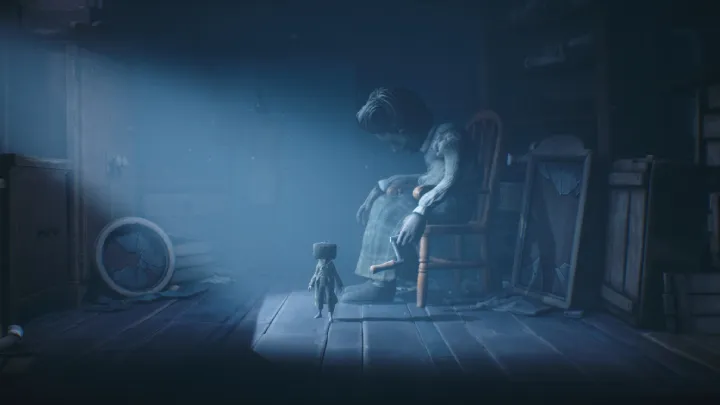
- The first major antagonist, the Hunter, sets the tone for the entire game. He embodies the concept of inescapable danger. His movements are heavy and deliberate, his gunshots echo through the forest, and his mask hides any trace of humanity. Players are not encouraged to fight but to flee.
This design choice emphasizes vulnerability. Mono and Six are small, fragile figures navigating a world built for giants who wish them harm. The Hunter symbolizes not just physical danger but the looming presence of predatory authority. He hunts because he can. His power is unquestioned.
 Defeating him does not bring relief. Instead, it leads the player to question what kind of world allows beings like him to thrive—a thematic undercurrent that shapes the rest of the game.
- The Teacher And The Distortion Of Discipline
- In the School chapter, the Teacher dominates the environment with her long, snake-like neck. She represents corrupted discipline and authoritarian control. Her exaggerated physical form mirrors her exaggerated need for order. When she bends her head around corners or stretches it through ventilation ducts, the player feels constantly watched.
Her students—the porcelain bullies—represent blind obedience. They show no individuality, no remorse, and no emotion. They act because they are shaped to act.
This chapter stands out because it transforms common childhood fears into tangible threats. The Teacher is not just a boss; she is a twisted reflection of the authority figures who fail to protect, choosing instead to control.
- The Hospital And The Horror Of Bodily Manipulation
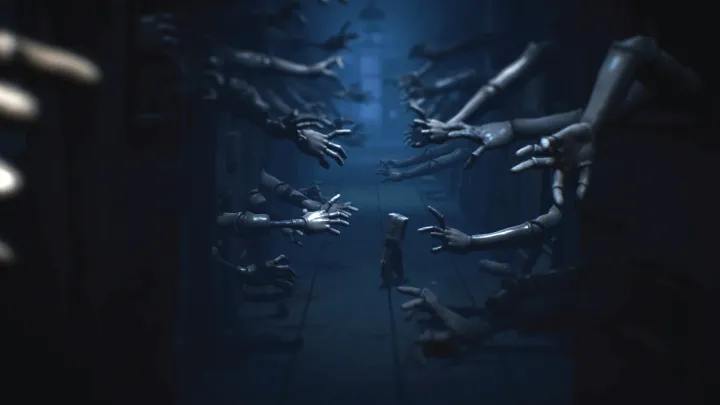
- The Hospital chapter introduces the Patients—limb-heavy creatures that only move when unlit. These enemies create one of the most unsettling mechanics in the game. When the light shines on them, they freeze in horrifying poses. Turn away for even a moment, and they crawl, jerk, or rush toward the player.
The Doctor, who serves as the chapter’s antagonist, mirrors the theme of forced “correction.” His obsession with reshaping bodies and creating unnatural forms symbolizes the fear of losing autonomy. His lair is filled with discarded limbs, screaming prosthetics, and half-formed dolls.
This chapter’s fear comes from the idea of being changed against your will—a theme that resonates on psychological levels far deeper than physical horror.
- The Pale City And The Loss Of Identity
- As Mono and Six enter the Pale City, the world transforms into a maze of televisions, static interference, and faceless citizens. These figures shuffle endlessly toward screens, their identities erased. The city illustrates the consequences of control—the erasure of self.
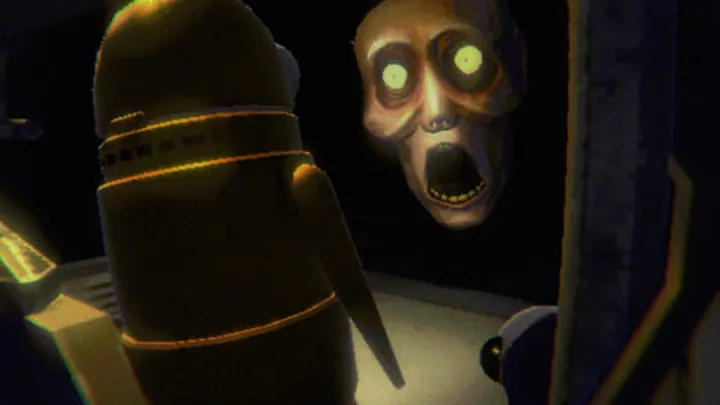
This environment shifts the game’s emotional tone. Instead of molding fear from grotesque creatures, it builds horror through emptiness. The Thin Man, who emerges from the television, embodies absolute control. His movements are smooth, slow, and deliberate. He does not chase; he advances, knowing the world bends to him.
This chapter explores how fear operates when the threat is not chaos, but silence.
- The Thin Man And The Struggle For Autonomy
- The confrontation with the Thin Man is one of the game’s most symbolic moments. Mono’s abilities begin to awaken, and his fight against the Thin Man becomes a metaphor for resisting control. Each pulse, each push, represents a struggle to reclaim agency.
His defeat does not mark victory. Instead, it signals a shift in Mono’s fate. The player begins to understand that the Tower’s influence is deeper than expected. The Thin Man was not the source of corruption—only one of its manifestations.
This encounter is a turning point. It refocuses the story from survival to identity, preparing the player for the emotional devastation of the ending.
- The Signal Tower And The Truth Behind Six
- The Signal Tower reflects the inner turmoil of Six. Its rooms twist and reshape as the player advances. Music boxes, childhood symbols, and distorted décor reveal a fragmented emotional state. Six is no longer just a companion. She becomes a threat—not by choice, but by corruption.
The final confrontation represents betrayal, fear, and the collapse of trust. Mono attempts to save her, but the Tower’s influence warps her into a monstrous figure. The player must break the bond that has guided them from the beginning.
This chapter serves as both climax and revelation. The truth behind Six’s actions in the final moment is left ambiguous, but its emotional weight is undeniable.
- The Ending And The Cycle Of Despair
- The ending of Little Nightmares II is one of the most discussed in modern horror games. Mono’s transformation into the Thin Man reveals a tragic time loop. This twist reframes the entire narrative—Mono was always destined for corruption, and Six’s betrayal may have been influenced by memories she could not fully understand.
The cycle symbolizes the inevitability of systems that consume innocence. Control breeds control, fear creates fear, and those who escape it risk becoming part of it.
This final twist elevates the game beyond horror into philosophical exploration. The true nightmare of Little Nightmares II is not the monsters, but the inevitability of becoming one.
Conclusion
Little Nightmares II earns its place as a top-tier game not through spectacle but through emotional depth, symbolic storytelling, and meticulous design. Every chapter layers meaning upon fear, crafting an experience that lingers long after completion. Its world examines control, authority, identity, and corruption through the lens of childhood vulnerability. The game’s ending, controversial yet brilliant, solidifies its status as one of the most haunting and meaningful horror narratives of its generation.