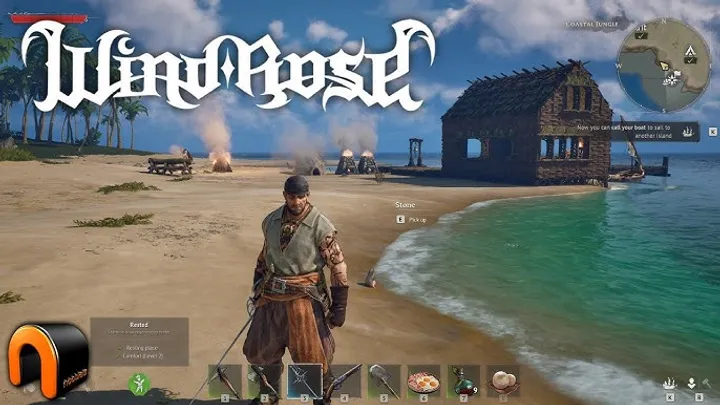
Windrose may look approachable compared to hardcore survival games, but underneath its cinematic oceans and pirate fantasy atmosphere is a surprisingly brutal efficiency system. The game rarely punishes players immediately. Instead, it slowly drains time, resources, durability, and momentum through dozens of hidden mechanics that inexperienced players barely notice.
That is why many players reach the 80–100 hour mark and suddenly feel stuck.
Their ships become expensive to maintain. Resource routes collapse. PvP encounters become unwinnable. Blueprint progression slows dramatically. Travel starts feeling repetitive. Worse, many players blame the game itself without realizing that the real issue is structural inefficiency built during the first half of their playthrough.
The difference between average players and elite Windrose captains is not reaction speed or aim. It is system knowledge.
Experienced players understand hidden efficiencies:
- How the wind system actually manipulates travel speed
- Why certain islands should never become permanent bases
- How cargo weight secretly affects combat survival
- Which resources are mathematically inefficient to farm manually
- Why most players waste massive amounts of repair materials
- How faction timing changes progression speed
This guide focuses on advanced practical strategies that genuinely improve long-term gameplay efficiency. These are not beginner tips like “collect wood” or “upgrade your tools.” Instead, this article explores the deeper mechanics and habits that experienced Windrose players use to dominate both PvE and PvP environments.
The guide is organized chronologically based on how progression evolves throughout a full Windrose journey.
Why most players ruin their progression during the first five hours
The early game in Windrose feels deceptively forgiving. Food is easy to gather, enemies are weak, and the first islands appear resource-rich. Because of this, new players often enter what veteran players call the “comfort trap.”
The comfort trap happens when players overinvest in temporary infrastructure.
Common mistakes include:
- Building oversized starter bases
- Crafting decorative structures too early
- Hoarding low-tier resources
- Farming excessive food reserves
- Creating unnecessary storage rooms
- Over-upgrading primitive gear
All of these actions consume time that should instead be spent unlocking mobility and exploration.
Efficient players treat the first five hours as reconnaissance.
Their real priorities are:
- Mapping nearby regions
- Locating mid-tier resources
- Understanding faction activity
- Identifying docking-safe coastlines
- Discovering shipwreck spawn routes
The biggest hidden truth about Windrose progression is this:
Mobility creates progression faster than combat power.
How experienced players use “micro-bases” instead of giant headquarters
One of the smartest advanced strategies in Windrose is abandoning the idea of a single giant home base.
Many beginners construct massive fortresses near their spawn island because survival games traditionally reward centralized building. Windrose works differently because the game’s economy is geographically fragmented.
Critical resources are intentionally spread across distant islands.
This means centralized logistics eventually become inefficient.
Veteran players instead create micro-bases.
A proper micro-base usually contains
- Small repair station
- Emergency food storage
- Backup ammunition
- Bedroll spawn point
- Minimal crafting setup
- Docking access
These outposts dramatically reduce travel downtime.
Instead of returning to one main base repeatedly, experienced players operate through a network of regional support locations.
This becomes especially important after unlocking larger ships because repair and resupply costs increase significantly.
Why cargo weight secretly controls your survival chances
Most players understand that heavier cargo slows ships slightly.
What many do not realize is how deeply cargo weight affects survival mechanics.
Excessive cargo changes:
- Turning radius
- Acceleration recovery
- Storm resistance
- Cannon stability
- Escape potential
- Collision damage
This is why overloaded ships die constantly during ambushes.
New players often carry:
- Excess raw materials
- Duplicate tools
- Unnecessary ammunition
- Multiple armor sets
- Decorative loot
- Random salvage items
Veteran players aggressively manage inventory weight.
Advanced cargo management strategy
Always separate inventory into:
- Essential combat items
- Emergency survival supplies
- Trade cargo
- Replaceable resources
Never transport all valuables simultaneously.
Many elite players intentionally travel with lower profit margins simply to maintain mobility advantages.
In Windrose, surviving consistently generates more wealth than maximizing one risky shipment.
How to manipulate wind systems instead of fighting them
One of Windrose’s least explained mechanics is dynamic wind efficiency.
Most players simply point their ship toward objectives and sail directly. This is highly inefficient.
Wind direction dramatically changes:
- Fuel usage
- Sail efficiency
- Acceleration
- Long-distance travel speed
- Storm exposure time
Experienced players navigate diagonally rather than directly against unfavorable wind.
This creates massive long-term efficiency gains.
Important advanced sailing habits
- Use island chains as wind buffers
- Avoid open-ocean storms during cargo runs
- Travel at dawn for visibility advantages
- Memorize recurring wind corridors
- Reduce sail during sharp turns
- Never anchor in high-current regions
Players who master wind mechanics progress much faster economically because transportation becomes cheaper and safer.
Why repairing constantly is one of the worst habits in the game
Many beginners repair their ships far too frequently.
This seems logical at first. Players want maximum durability before every journey. But constant repairs waste huge amounts of rare materials over time.
Experienced players understand durability thresholds.
For example:
- Minor hull damage rarely matters
- Cosmetic wear has no functional impact
- Certain durability losses scale inefficiently
- Emergency repairs are often cheaper
The most efficient captains repair strategically rather than emotionally.
Good repair timing usually includes
Repair immediately:
- Before faction wars
- Before storm-zone travel
- Before boss encounters
- Before PvP expeditions
Delay repairs:
- During casual gathering
- While exploring safe regions
- During short trade routes
- Before planned ship upgrades
This dramatically reduces long-term material consumption.

How advanced players farm blueprints efficiently
Blueprint progression becomes a major wall for average players around mid-game.
Most players rely too heavily on random exploration.
Veterans use probability stacking instead.
Rare blueprints are influenced by:
- Region danger scaling
- Event completion chains
- Ship tier
- Faction reputation
- Dungeon order
- Weather conditions
The biggest beginner mistake is repeatedly farming safe areas.
High-value blueprints usually appear in:
- Dynamic naval battles
- Storm wreckage sites
- Contested faction islands
- Timed world events
- Deep salvage zones
Another important mechanic is cooldown rotation.
Windrose quietly reduces repeated reward quality if players spam identical activities too often.
Efficient players rotate activities constantly.
Why faction reputation should be treated like an economic resource
Most players see factions emotionally:
- Allies
- Enemies
- Pirates
- Merchants
Veteran players see factions mathematically.
Faction reputation directly affects:
- Trade pricing
- Repair costs
- Resource availability
- Smuggling access
- Patrol protection
- Blueprint opportunities
One advanced strategy involves controlled hostility.
Instead of maximizing reputation with every faction, experienced players intentionally maintain balanced tension.
Why?
Because some black-market systems only appear when reputation falls within specific ranges.
This creates access to:
- Rare ammunition
- Illegal modifications
- Smuggler contracts
- Hidden trade routes
Faction manipulation becomes one of the strongest mid-to-late-game advantages.
How elite PvP players prepare before combat even starts
Most inexperienced players believe naval PvP is about cannon accuracy.
It is not.
The battle is usually decided before ships even engage.
Preparation determines survival.
Experienced PvP players carefully manage:
- Wind positioning
- Escape angles
- Cargo weight
- Ammunition variety
- Repair reserves
- Crew assignments
One hidden factor many players ignore is silhouette visibility.
Large ships become easy targets during:
- Moonlit nights
- Open-water travel
- Calm weather conditions
Advanced players often travel through:
- Fog zones
- Storm edges
- Island shadows
- High-current corridors
Not because it looks cinematic — because it reduces detection range.
Why solo players progress slower after mid-game
Windrose technically supports solo progression, but the game’s deeper systems increasingly reward specialization.
Many players become inefficient because they try to do everything alone.
Large-scale efficiency comes from role separation.
Strong multiplayer groups often divide responsibilities
- One navigator
- One ship engineer
- One trader
- One combat specialist
- One explorer/scout
This creates exponential progression scaling.
For example:
- Traders optimize wealth generation
- Scouts locate rare events faster
- Engineers reduce maintenance costs
- Combat specialists protect cargo routes
Solo players must compensate through extreme efficiency and careful risk avoidance.
That is why many advanced solo players focus heavily on stealth logistics instead of aggressive expansion.
How to prevent late-game resource burnout
One of Windrose’s biggest hidden problems is mental exhaustion.
Late-game players often enter endless grinding loops:
- Farming repairs
- Repeating trade routes
- Collecting upgrade materials
- Managing logistics endlessly
This usually happens because players fail to transition from survival thinking into empire thinking.
The game changes dramatically once scalable systems appear.
Instead of gathering manually forever, advanced players create:
- Automated production chains
- Crew-managed farming systems
- Rotating trade schedules
- Passive resource generation
- Specialized fleet operations
This transforms gameplay from repetitive labor into strategic management.
The smartest players eventually spend more time making decisions than farming resources personally.
Why discipline matters more than talent in Windrose
One of the biggest misconceptions about Windrose is that high-level gameplay requires mechanical skill.
In reality, most successful players are simply disciplined.
The game constantly tempts players with distractions:
- Side activities
- Cosmetic upgrades
- Unnecessary exploration
- Random treasure hunts
- Overbuilding projects
Experienced players avoid impulsive behavior.
They prioritize:
- Long-term routing efficiency
- Resource scaling
- Risk management
- Strategic upgrades
- Sustainable progression
This is why some average-combat players become incredibly wealthy and powerful while mechanically skilled players remain trapped in inefficient loops.
Windrose rewards structure far more than aggression.
Conclusion

Windrose is not just a pirate survival game. Beneath the cinematic presentation lies a deeply interconnected system of logistics, movement, economics, and strategic planning.
Players who approach the game casually can still have fun, but they often struggle later because the systems quietly punish inefficient habits built during the early game. Overbuilding, poor cargo management, random exploration, and emotional decision-making eventually create massive progression slowdowns.
The strongest Windrose players think differently.
They treat:
- Mobility as power
- Information as currency
- Time as the most valuable resource
- Logistics as survival
- Preparation as combat
That mindset transforms the entire game.
Instead of constantly reacting to problems, experienced captains create systems that prevent problems from appearing in the first place.
And that is ultimately the biggest secret in Windrose:
The players who dominate the oceans are usually not the most aggressive pirates.
They are the most efficient planners.