The Haunting of the Rails: Narrative Symbolism in Choo Choo Charles
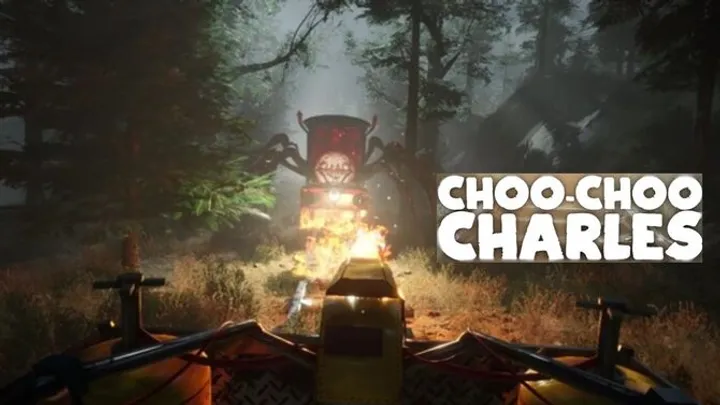
Beneath its terrifying exterior, Choo Choo Charles is not just a horror game about a monstrous train; it’s a story about fear, industrialization, and humanity’s relentless urge to control nature. The game’s narrative, though delivered through short exchanges and environmental storytelling, reflects a deep symbolic struggle—man’s creation turning against him, progress morphing into destruction.
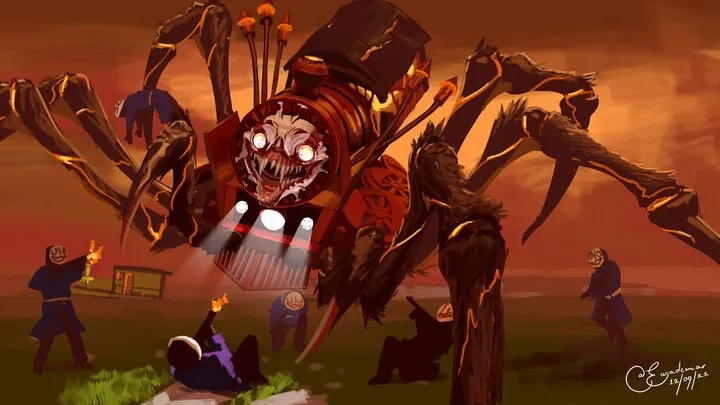
This article dives into the symbolic structure of Choo Choo Charles, analyzing how its story, setting, and characters work as allegories for human ambition, isolation, and the haunting remnants of forgotten industry. Rather than focusing on gameplay mechanics, we explore the underlying themes that make the game unsettlingly human despite its monstrous premise.
1. The Birth of the Monster: Charles as the Symbol of Corrupted Progress
The game begins with a clear metaphor: a train, once a proud symbol of innovation and exploration, has become the ultimate predator. Charles isn’t just a monster—he is a manifestation of corrupted human progress.
In many ways, Charles represents the consequences of unchecked ambition. The world of Choo Choo Charles is littered with the remains of mining operations and industrial experiments gone wrong. The locals’ desperation and dependence on technology mirror humanity’s tendency to exploit the environment without foresight.
The twisted fusion of locomotive and living flesh captures this contradiction perfectly. The train—humanity’s emblem of modernization—is now fused with organic horror, suggesting that technology, when driven by greed, can evolve into something uncontrollable and predatory.
2. The Island of Aranearum: A Landscape of Industrial Decay
The island where Choo Choo Charles takes place is as much a character as the monster itself. Its environments tell a silent story of collapse—mines run dry, railways rusting into the earth, and towns reduced to ghostly remnants of their former selves.
Every sound, every ruined structure whispers of a past age of prosperity that ended abruptly. The rail system, once designed for progress, now serves as a literal and metaphorical trap—rails that lead nowhere but back into danger.
This environmental decay mirrors the psychological decay of those who remain. The island’s inhabitants cling to fragments of a world that no longer exists, showing how humanity continues to inhabit ruins of its own making. The setting thus reinforces the central theme: the failure of human progress and the haunting persistence of what it leaves behind.
3. The Locals: Survivors in Denial
The non-player characters (NPCs) in Choo Choo Charles are more than quest-givers—they are reflections of different human responses to catastrophe. Some cling to hope, others embrace madness, and a few turn to worshipping the monster as a deity.
This variety of perspectives paints a psychological portrait of denial and adaptation. The villagers’ coexistence with Charles represents humanity’s tendency to normalize chaos when it becomes unavoidable. They know the danger but accept it as part of their world, building their routines around survival rather than resistance.
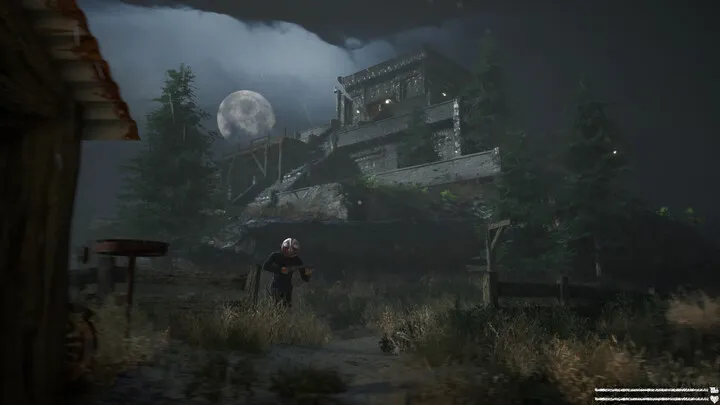
Their fragmented dialogues reveal glimpses of loss—friends taken, families scattered, and faith distorted. Yet, amid despair, they continue to work, trade, and hope. This resilience, though tragic, shows the indomitable nature of human will, even when faced with its own creations gone wrong.
4. The Rail Network: A Symbol of Control and Entrapment
The rail system that encircles the island is one of the game’s most potent symbols. Trains historically symbolize control over distance and time—humanity’s triumph over nature. But in Choo Choo Charles, the rails represent confinement rather than freedom.
Every track ties the player to a specific path. There is no escape from the circularity of the system—one must ride the rails, knowing they lead through danger. This structure is symbolic of humanity’s technological traps: inventions that promise liberation but create dependence.
In essence, the player’s journey becomes a metaphor for humanity’s dance with technology. We must move forward on rails we built ourselves, even if those paths lead us straight toward destruction.
5. The Player’s Train: Humanity’s Last Fortress
The player’s train, customizable and upgradeable, acts as the only controllable piece of technology in the game. It is humanity’s last fortress—a symbol of adaptation rather than domination.
Unlike Charles, which represents technology running amok, the player’s train is a contained machine, guided by human hands and reliant on human ingenuity. It evolves as the player invests time and resources into it, mirroring humanity’s attempt to reclaim control over its inventions.
The emotional relationship players develop with their train underlines this symbolism. It becomes more than a vehicle—it’s a companion, a safe space, and a fragile barrier between man and monster. The contrast between the player’s train and Charles himself defines the game’s central thematic tension: mastery versus madness.
6. The Mines: Descent into the Heart of Human Obsession
Mining plays a critical role in the story of Choo Choo Charles. The mines aren’t just resource hubs—they’re symbolic of humanity’s constant digging into the unknown, driven by greed and curiosity.
Descending into the mines feels like entering humanity’s subconscious. The darkness, the echoes of pickaxes, and the unnatural quiet all speak to the consequences of relentless exploitation. The deeper you go, the more unstable everything becomes—mirroring how human pursuit of power often leads to self-destruction.
By connecting the mines to Charles’ origin, the game crafts a clear metaphor: the monster was born from human hands digging too deep, both literally and figuratively. The horror isn’t just that something was unleashed—but that we kept digging even after the first warning signs.
7. The Cult of Charles: Faith Turned Mechanical
One of the game’s most fascinating elements is the cult that worships Charles. This group transforms fear into devotion, interpreting the monster as a divine force rather than a mistake.
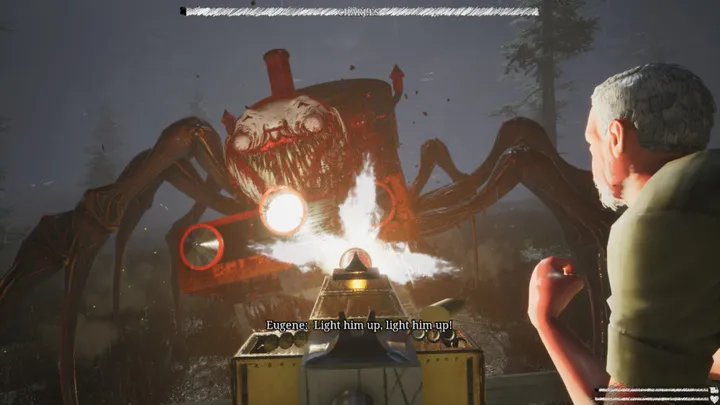
Their presence adds a layer of psychological complexity. In the face of unstoppable terror, some humans choose surrender over resistance. The cult’s rituals—combining religious iconography with industrial relics—represent a world where technology has replaced godhood.
This shift mirrors real-world anxieties about technological domination. As society grows more dependent on machines, faith and fear merge, creating new forms of worship centered on the power of invention rather than the sanctity of creation. The cult thus serves as both satire and tragedy—a symbol of humanity worshiping what destroyed it.
8. Environmental Storytelling: Narratives in Rust and Ruin
Every corner of the island in Choo Choo Charles tells a story without words. Abandoned stations, destroyed rail cars, and decaying tools all function as narrative fragments that piece together a larger tragedy.
This form of storytelling rewards observation over action. Players who explore slowly discover the remnants of an industrial community—posters warning of disappearances, letters hinting at failed experiments, and tools left mid-use as workers fled. Each artifact becomes a piece of testimony to humanity’s downfall.
What makes this method effective is its restraint. The game never tells players exactly what happened; it lets them infer, creating an active engagement with the environment. The silence of the world speaks louder than any cutscene ever could.
9. The Monster’s Psychology: When Creation Mirrors Its Maker
Though Charles lacks dialogue, his behavior reflects an eerie intelligence. He stalks, retreats, and ambushes strategically, suggesting purpose beyond simple hunger. In this way, Charles mirrors the obsessive drive of his human creators—always moving forward, never resting, and destroying everything in his path.
This behavioral mirroring turns Charles into an allegorical reflection of humanity. He is progress personified, relentless and indifferent to destruction. The player, attempting to outsmart him, reenacts the same struggle that birthed him: control versus chaos.
This duality gives the game emotional depth. Charles isn’t just an external threat; he’s a projection of internal fears—what happens when human ambition evolves beyond empathy or consequence.
10. The Ending and Aftermath: The Cycle of Creation and Destruction
The final confrontation with Charles culminates in a violent clash between man and machine. The player, armed with modified weapons and a fortified train, finally brings down the monster. But even in victory, there’s an undertone of tragedy.
The destruction of Charles doesn’t erase what created him. The island remains scarred, the rails still twisted. The final scenes suggest that another cycle may soon begin—a new creation rising from the wreckage of the old. This cyclical theme echoes the nature of industrial and environmental collapse: humans destroy, rebuild, and destroy again.
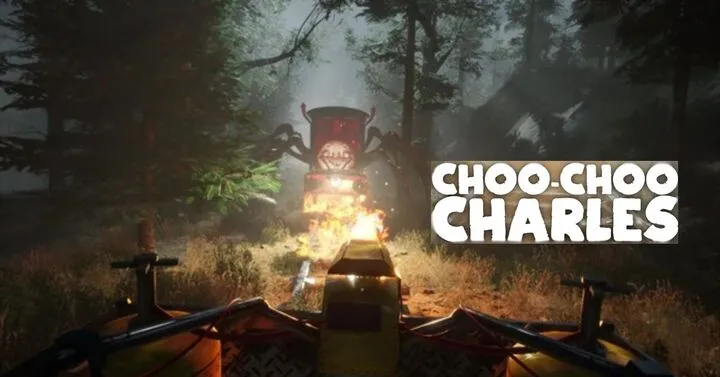
The game’s ending thus serves as a philosophical reflection on humanity’s inability to learn from its creations. The silence that follows Charles’ death isn’t peace—it’s anticipation, as if the world is waiting for the next monster to be born.
Conclusion
Choo Choo Charles may seem like a bizarre horror concept—a killer train in a decrepit world—but beneath its surface lies a poignant story about human ambition, technological excess, and existential fear. Every rail, every screech of metal, and every abandoned settlement reinforces the same warning: progress without purpose leads to ruin.
Through its haunting symbolism and environmental narrative, Choo Choo Charles becomes more than a monster game—it becomes a fable of the modern world, where humanity’s engines of progress sometimes roar too loudly to hear the echoes of their own destruction.